
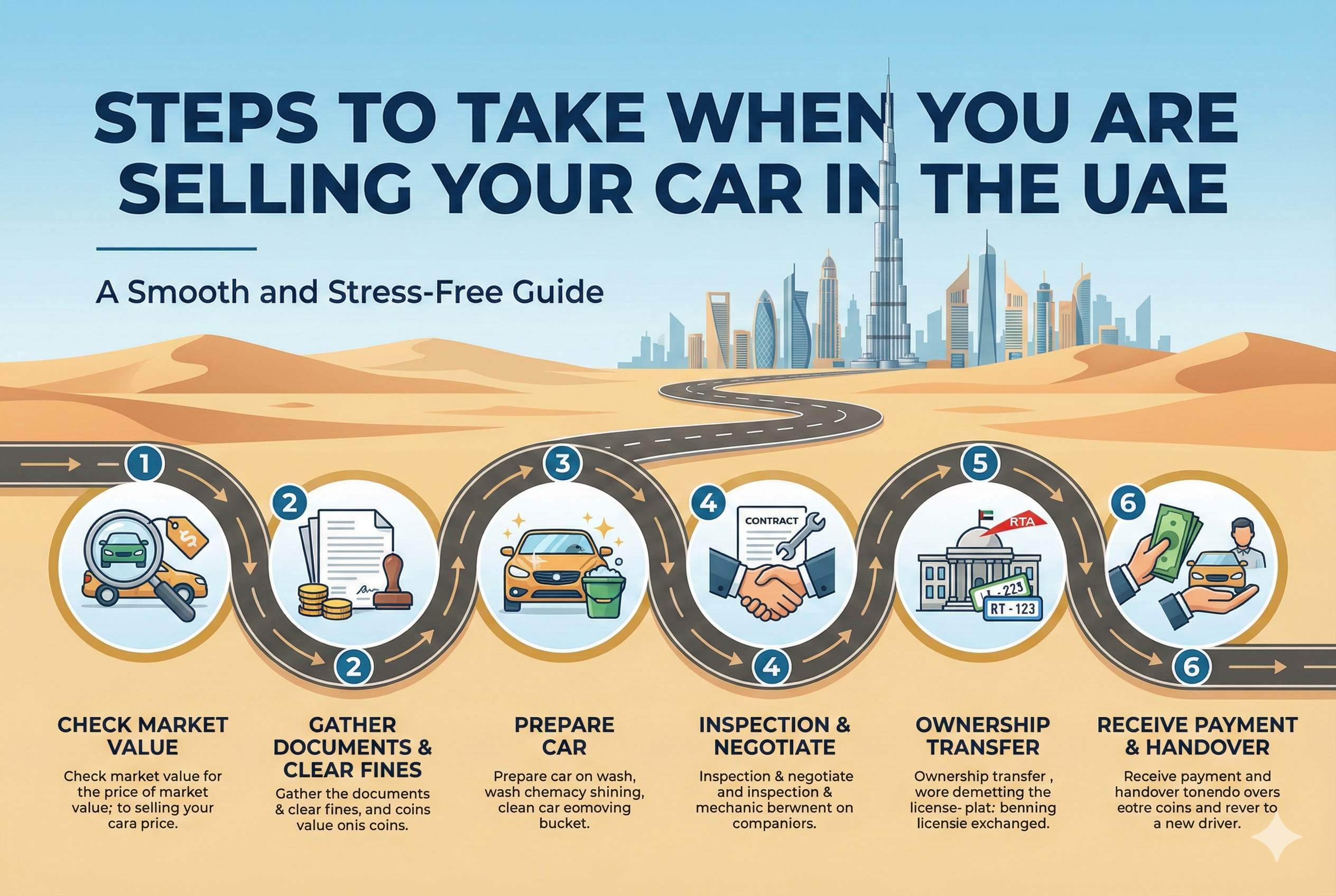
Selling a car in the UAE can be a smooth and stress-free process if you follow the right steps in the correct order. Whether you are upgrading to a newer vehicle, leaving the country, or simply no longer need your car, understanding how car sales work locally will help you save time, avoid legal issues, and get the best possible price.
The UAE has clear regulations for vehicle ownership transfer, inspection, and payment, but many sellers still face delays or losses because they skip important steps. This guide explains exactly what to do when selling your car in the UAE, using simple language and practical advice.
Step 1: Decide How You Want to Sell Your Car
Before doing anything else, you need to decide how you plan to sell your car. In the UAE, the most common options are selling to a private buyer, selling to a car dealer, or selling to a car buying or scrap service.
Private sales usually offer higher prices but take more time and effort. Dealers and buying services are faster and more convenient, though prices may be slightly lower. If your car is old, damaged, or fails inspection, selling to a scrap or car removal service may be the most practical choice.
Knowing your preferred route helps you prepare correctly and set realistic expectations.
Step 2: Check Your Car’s Market Value in the UAE
Once you’ve decided how to sell, the next step is to understand what your car is worth in the current UAE market. Car values vary based on brand popularity, condition, mileage, service history, and demand within the Emirates.
You can check online valuation tools, browse listings for similar vehicles, or request instant quotes from professional buyers. This step is important because it prevents you from underpricing your car or accepting unfair offers.
If you want a quick and accurate estimate without commitment, it’s a good idea to visit our site and get a free car valuation based on UAE market data.
Step 3: Clear Any Outstanding Loans, Fines, or Salik Issues
In the UAE, you cannot legally sell a car if it has unresolved financial or legal obligations. Before proceeding, make sure the vehicle is completely clear.
This includes settling any bank loans or finance linked to the car, paying outstanding traffic fines, and resolving Salik or toll issues. If the car is still under bank finance, you will need a clearance letter from the bank once the loan is fully paid.
Completing this step early avoids delays during ownership transfer and builds trust with buyers.
Step 4: Gather All Required Documents
Selling a car in the UAE requires specific documentation. Having everything ready in advance makes the process faster and more professional.
You will usually need your Emirates ID, the vehicle registration card (Mulkiya), and valid insurance details. If the car is registered in your name, the process is straightforward. If the car is registered under a company or another person, additional authorization may be required.
Buyers are far more confident when documentation is complete, and many will offer better prices when the paperwork is ready.
Step 5: Prepare the Car for Sale
A car that looks cared for is easier to sell and often commands a better price. Even small efforts can make a noticeable difference.
Wash the exterior, clean the interior, remove personal belongings, and address any minor cosmetic issues if possible. While you don’t need to spend heavily on repairs, basic cleanliness creates a positive first impression.
If your car is not running or is being sold as scrap, preparation still matters. Making the car accessible for inspection and towing helps avoid delays and confusion.
Step 6: Arrange a Vehicle Inspection (If Required)
In most private sales, the buyer will request a vehicle inspection to confirm the condition of the car. In the UAE, this is commonly done through authorized testing centers.
If you are selling to a dealer or professional buying service, they may handle the inspection themselves or skip it entirely for older or scrap vehicles. However, knowing whether your car can pass inspection is important, as repeated failures can reduce its value significantly.
If your car fails inspection multiple times and repairs are costly, selling it to a scrap or car removal service may be the smarter financial choice.
Step 7: Negotiate and Agree on a Final Price
Once inspections and checks are complete, you’ll negotiate the final price. In the UAE, negotiation is normal, but it should be respectful and realistic.
Having multiple offers gives you stronger bargaining power. Be honest about the car’s condition, as transparency builds trust and avoids disputes later. Avoid accepting verbal agreements—always confirm the final price clearly before moving forward.
Professional buyers usually provide fixed, upfront prices, which simplifies this step. If you want transparent pricing with no pressure, you can visit our site to receive a clear offer instantly.
Step 8: Complete Ownership Transfer or Deregistration
Ownership transfer is a critical legal step when selling a car in the UAE. This is typically done through the RTA or relevant transport authority, depending on the emirate.
For private sales, both buyer and seller usually need to be present to complete the transfer. For scrap or removal services, the vehicle is deregistered instead, and number plates are returned.
Never hand over your car without completing this step. Failure to properly transfer or deregister can result in fines, legal responsibility, or future liability.
Step 9: Receive Payment Securely
Always ensure you receive payment securely and in full before handing over the vehicle or signing final documents. Common payment methods in the UAE include bank transfers and instant cash payments, depending on the buyer.
Avoid post-dated cheques or delayed payments. Reliable buyers will pay immediately once the process is complete. If payment terms are unclear, do not proceed.
Professional car buyers and scrap services usually offer same-day payment, which adds peace of mind.
Step 10: Cancel Insurance and Keep Records
After the sale or deregistration is complete, contact your insurance provider to cancel the policy. In many cases, you may receive a partial refund for unused coverage.
Keep copies of all documents related to the sale, including transfer receipts, deregistration papers, and payment confirmations. These records protect you in case of future disputes or inquiries.
Final Thoughts: Selling Your Car in the UAE Made Simple
Selling a car in the UAE does not have to be complicated. By following these steps in order, choosing the right selling method, preparing documents, clearing obligations, and completing legal transfer, you can avoid stress and ensure a smooth transaction.
Whether your car is in excellent condition or nearing the end of its life, making informed decisions helps you save time and money. If you’re looking for a fast, reliable, and hassle-free way to sell your car, especially if it’s old or damaged, you’re welcome to visit our site for expert guidance and instant offers tailored to the UAE market.